From Terraces to Seats: How Spectator Space Changed the Matchday
From terraces to seats, spectator space changed how crowds watched together. Understand what standing, seating and hybrid layouts offer different supporters.
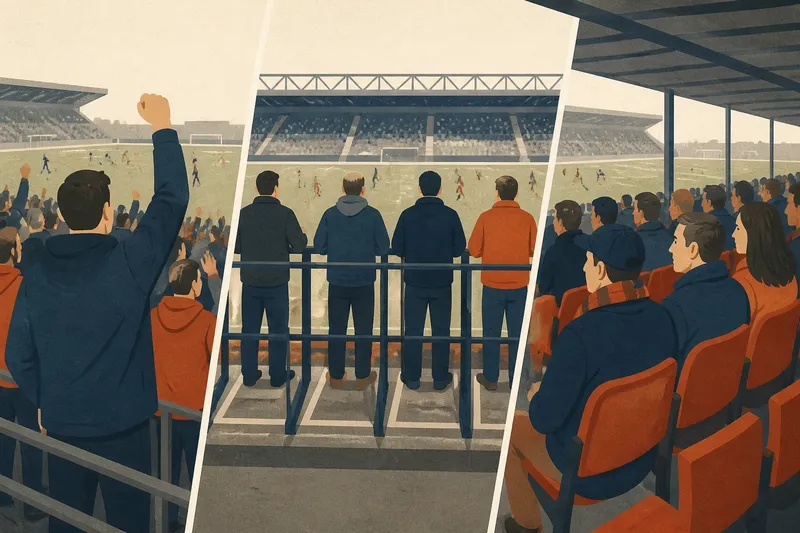
From terraces to seats, spectator space changed who could gather, how they watched and what a crowd could do together. The shift was not simply from one kind of surface to another: it altered the bargain between freedom of movement, personal space and a shared view of the match.
A standing terrace let people choose their position within a broad crowd. A seat assigned each spectator a place, making the arrangement easier to organise but more individual. Today’s grounds combine those habits in different ways, and the right arrangement depends on what a supporter needs from the occasion.
Standing’s shared field
On an open terrace, a supporter’s position could change with the crowd. People edged towards friends, moved to see around someone taller or shifted as the action travelled from one end of the pitch to the other. The space belonged to the group in a practical sense: there might be no marked boundary between one person’s patch and the next.
That flexibility made the terrace socially porous. Regulars could develop familiar meeting points, and newcomers could join a body of spectators without first locating a particular row and seat. The view, however, depended on the height of those ahead and the movement of everyone around them. A good position was not a fixed possession.
Standing also made collective reactions physically visible. A surge of bodies, a sudden turn towards the goal or a restless adjustment during a tense spell travelled through the stand. The crowd’s response was not merely heard; it changed the shape and motion of the space.
Seats and personal territory
Individual seats made each place legible. A ticket could direct its holder to a row and position, and neighbours had clearer boundaries. That arrangement helps people who need a known place, want to sit, or prefer not to negotiate their position continuously with a moving crowd.
The trade-off is that a seat fixes the spectator’s relation to the pitch and to those nearby. A supporter can still stand, sing or turn to speak, but the row gives those actions a more defined footprint. The shared experience remains; its physical expression becomes more local and organised.
Seating also changes how supporters arrive together. A group can book adjacent places and expect to remain together, rather than trying to hold a patch of terrace. That can make the match easier to plan for families, friends with different mobility needs, or anyone who values a predictable view more than freedom to move.
Choose by situation
There is no single best arrangement for every supporter. Think about the actual demands of the visit: whether you need to sit, how much movement suits you, whether your group must stay together and how comfortable you are sharing close space with a large crowd.
- Choose a seated area if you need a defined place. A reserved seat gives you a known location and reduces the uncertainty of finding room beside companions. It is the more straightforward fit for anyone who wants to remain seated for much of the match.
- Choose a standing area if movement is part of the appeal. An open terrace suits supporters who like shifting position and experiencing the crowd as a moving group. It is less suitable if an uninterrupted view or a fixed personal space matters most.
- Choose a designated rail-seating or safe-standing section if you want a standing atmosphere with marked positions. These arrangements retain a place for each spectator while allowing people to stand. They suit supporters who enjoy standing but do not want the open-ended positioning of a traditional terrace.
- Choose an accessible viewing area if ordinary rows or standing sections do not meet your access needs. These spaces are intended to provide a more suitable view and access arrangement. Ask the venue about its available locations and facilities before booking.
- Choose a mixed arrangement if your group has different preferences. A ground with both seated and standing sections lets companions decide whether staying together or choosing the preferred viewing style matters more for that visit. Check the seating plan rather than assuming nearby areas connect easily.
Imagine a group of friends includes one person who needs to sit and another who wants to stand and move with the crowd. They could choose adjacent seated places if staying together is the priority, accepting a more contained atmosphere; or choose separate sections if each person’s preferred way of watching matters more. The useful result is a decision made before arrival, rather than an argument conducted over a ticket map.
Hybrid arrangements
Modern grounds often offer more than a simple standing-versus-seated choice. Rail seating uses individual places with a barrier in front, while designated standing sections may organise spectators into marked spaces. These formats preserve some collective movement while giving the venue a clearer way to allocate positions.
The labels can vary between grounds, so look at the actual section description and layout. “Standing” may refer to a specific managed area, not an unrestricted terrace; a seat fitted with a rail does not necessarily mean the same experience as an open standing section. Venue information is more useful than assumptions carried over from another ground.
Hybrid sections can suit supporters whose preferences sit between the two familiar options. They may want to stand for much of the match but still value a defined position. Someone who wants to sit throughout, by contrast, should select a seated area rather than treating a rail as a substitute for a seat.
How should you choose?
Is standing better for a first visit?
Not automatically. Standing can make the crowd feel immediate, but a fixed seat is often easier if you want a known view and a clear place to meet companions. Choose according to your comfort with movement and close proximity, not the idea that one section is more authentic.
Can a group sit and stand together?
Only if the section’s arrangements allow it, and the group should not assume that a standing area is suitable for someone who needs to sit. If remaining together matters, look for a seated section that matches everyone’s needs or ask the venue about accessible options.
What does rail seating change?
It gives spectators individual marked positions and a barrier, while allowing standing in designated sections. It can offer a more structured alternative to an open terrace, but its feel depends on the ground’s layout and how the section is used.
Does a seat remove the shared atmosphere?
No. Supporters can respond together from seats, though their movement is more constrained by rows and individual places. The arrangement changes how a crowd expresses itself; it does not decide whether people care about the match.
Read the ground’s layout
Before buying, check the seating plan, ticket description and any information about accessibility or standing arrangements. Look for whether the section is reserved, whether spectators are expected to sit or stand, and whether your companions can select adjacent places. Where the answer depends on a venue’s rules or facilities, rely on its current guidance.
For a return visit, notice how your choice worked in practice. Did you spend the match trying to see around people, or were you glad to have room to move? Those observations are more useful than a general verdict on terraces or seats, because they connect the arrangement to the way you actually watch.
From terraces to seats, the lasting change is a shift in how much of a spectator’s place is shared and how much is assigned. When choosing a section, treat that distinction as the main question: do you want the crowd to provide room for movement, or a reliable place within it?